What Your Room’s Color Scheme Says About Your Vibe (from Relaxed to Focused!)
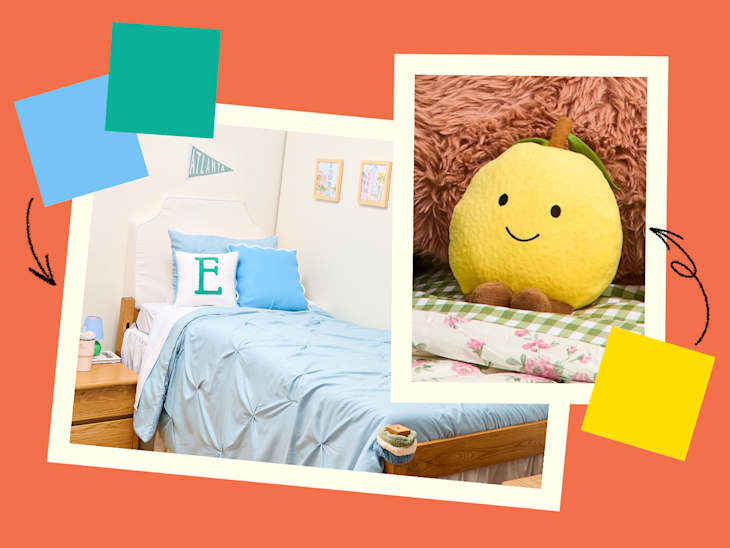
One of the easiest ways to transform a plain space into something that feels totally you is through color. Whether you’re trying to channel a cozy cottagecore look or go full-on dopamine decor, the right palette can seriously set the mood. No paint allowed? No problem. We’re talking bedding, tapestries, rugs, and lighting that bring the color without breaking the rules (or your RA’s heart).
Here are a few shades that color psychologists and interior designers suggest using in your dorm color palette.
Best Colors for Your Dorm Color Palette
Color is super personal — what feels calming to one person might feel chaotic to someone else. There’s no right or wrong dorm color palette or way to decorate your space. It’s all about what makes you feel good. That said, there are some ways to use color psychology, or the study of the relationship between colors and human moods and behaviors, to your advantage. Even small touches, like the hue of your desk lamp or throw blanket, can subtly shift the mood of your space. Here’s how.
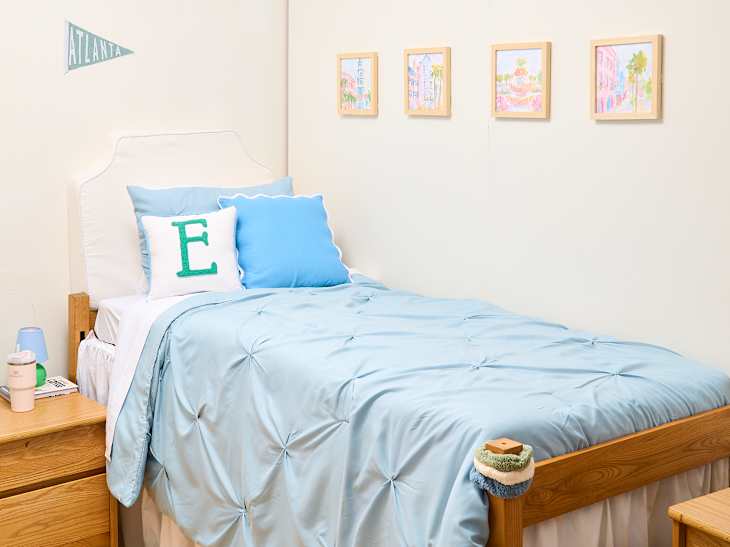
Blue: To Put Yourself to Sleep or Soothe Yourself
Students whose rooms don’t get much natural light can feel trapped or confined to the four walls of their dorms. If you don’t get to see the blue sky very often — especially during finals season — you can use color psychology to achieve that calming effect inside. Paul Mutimear, a former contractor and color consultant for 30 years, advises people to lean into blue hues around your space. “It’s mild, soft, and restful,” he says.

Blue is known as a calming color, but it also fosters creativity and relaxation. Those who need to unwind after a stressful school week could try incorporating the color through textiles like bedding or throw pillows. If you have the space, you could also bring in some blue through a small piece of furniture (like a three-tiered cart), an area rug, or some luxe drapes.

Yellow: To Feel Energized
One 2020 study that surveyed thousands of people on emotional associations with different colors found that 52% of participants felt yellow signals joy. It’s such a happy color! However, color psychologists say that while yellow can evoke feelings of optimism and energy, it also has the potential to be overpowering when used in abundance.

Sienna Blake, an interior designer at CabinetNow.com, says it can be tempting to overuse yellow in a space because it’s such a captivating color, immediately pulling your eye toward its bright and sunny sensation. She suggests incorporating yellow into your room using accent features like throw pillows, lamps, or simple artwork. You don’t have to go full highlighter to feel the boost; a mustard throw blanket, daisy-print pillow, or butter yellow desk lamp can brighten your whole setup.
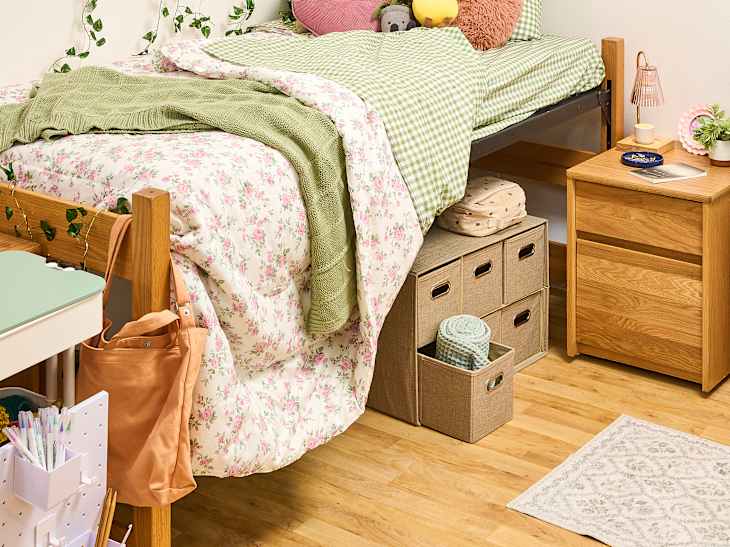
Green: To Evoke Feelings of Coziness and Safety
Pops of green in your dorm lend themselves to a restful and harmonious environment. Blake notes that most people are reassured by green on a primitive level, since it indicates the presence of life and water. She says the color green can have an immense positive impact on a person’s mood and emotional well-being. “It’s an excellent color to use when you want to create a room that feels warm and secure,” Blake says. “I generally suggest green accents such as a velvet pillow or desk organizer to introduce a natural feel without occupying much space.”

In fact, research that focused on treatments for seasonal affective disorder (a type of depression that aligns with a seasonal pattern, often during the cold, dark months of winter) showed that people exposed to green colors were found to have improved moods. Particularly for students whose moods are impacted by the colder seasons, this spirit-boosting effect is helpful to keep in mind when coming up with their dorm color palette.
Try placing some low-light-friendly houseplants on your desk or bookshelf, or you could even try tricking your brain by using faux plants or greenery. You can also decorate with a soft green lamp or green string lights to create a chill, cozy glow in the evenings.

White: To Create a Sense of Retreat and Relaxation
If white is your favorite color, it could indicate that you prefer colors that summon a sense of calmness or simplicity. It’s no wonder so many industries — like health and wellness, marketing, apparel, and technology — use the color to communicate cleanliness. Still, too much white in a space can make it feel sterile, which is often the case for college dorms. Luckily, there are some major upsides to having a room with a neutral backdrop. Designers use the color white to make small spaces feel bigger than they are.

If your room is already painted a shade of white, you don’t have to go overboard adding this color to the rest of the space. Instead, using textures of white or neutral fabrics, like linen or cotton, around the room will add layers of dimension to your decor. Sometimes, an off-white or beige color works best, Mutimear says. “I would do soft whites rather than a pure blinding white,” Mutimear advises.

Red: To Spark Excitement and Boost Focus
Perhaps the most divisive color to add to a space: red. Studies have shown that vivid colors, especially red, evoke the strongest emotions and can even elevate one’s heart rate. Maksim Sauchanka, an interior designer and remodeling expert, advises using this color in small doses, like an accessory on your windowsill or a vase of red flowers on your desk. “Red is bold, and I love using it sparingly to spark excitement and sharpen focus — crucial for powering through assignments or getting pumped for a big event,” Sauchanka says. “It’s energizing and stimulates alertness, but too much can feel aggressive, so use it strategically.”

Even if red doesn’t seem like a natural part of your dorm color palette, it might actually be the perfect accent according to interior designer Taylor Simon’s “unexpected red theory.” Simon claims that adding a dash of red — even if it seems like it wouldn’t belong — could be the key to reviving an otherwise regular-looking room.
Since red is such a vibrant and energizing color, it’s a particularly fitting color to use in areas of your room where you want to be productive. Think: on your desk via red organizers or a mouse pad. It adds energy to your study space and can help keep you alert, even during those late-night writing sessions.