The “Post-Campus Effect” I Didn’t Expect After Graduating (And What to Do If You Feel It Too)

Graduating with my master’s degree from New York University — remotely, mind you — was supposed to be the moment I’d been working toward for years. What I didn’t expect was the identity crisis that hit as soon as I pressed “submit” on my last assignment. With no more Zoom lectures to log on to, I found myself facing a world of too much freedom and way too much unscheduled time.
But, after a bit of trial and error, I learned how to embrace the post-campus effect in ways I didn’t see coming. Here’s how I managed not just to survive life after college but to actually thrive.
Furnish Your New Environment
For many graduates moving back home — as was the case for me — you’re most likely surrounded by an environment that feels dated. Part of embracing a new chapter of your life means setting new intentions for yourself and your space, which could involve clearing out old stuff, bringing in new favorites, or even finding a happy medium between the two.
Let’s be honest: While the poster of Zayn Malik isn’t going anywhere, maybe you can finally paint over the teal blue walls and donate the rogue Silly Bandz. Taking the time to redefine where you’ll be planning your next steps can transform how you feel as a postgraduate.
Even if you’re moving into a brand-new home (maybe even in a new city!), chances are you’re bringing many of your college belongings with you. Culling through your things and mindfully choosing some new decor can help you start this new phase thoughtfully and purposefully.
Licensed child and adolescent psychologist Dr. Tamar Kahane says sprucing up your space can provide the much-needed agency you might be seeking. She emphasizes how small changes can have a big impact on how you perceive your environment moving forward. But, Kahane notes that people transitioning to life after college should also be forgiving as they’re finding their new groove.
For me, I knew I wanted my room to feel cozy and conducive to productivity. I swapped my battered old office chair for two vintage green armchairs that I thrifted on OfferUp for only $40. These two pieces helped to elevate my space and are multifunctional as well. I’ve binged many novels in these chairs, written cover letters, and, when friends are over, plenty of tea has been spilled while sitting in them. Though they weren’t a huge splurge, they’ve helped make my space feel fresh and like a better fit for my postgraduate self.

Make a New Routine
As an alum of Zoom University, I realized how much I craved structure. Apart from a brief semester in Washington, D.C., I spent most of my college years behind a laptop. That meant I was in charge of my own time — managing classes and deadlines, internships, and extracurriculars.
Before a new semester, I used to mark down class times on a free online schedule maker (either Coursicle or Gizmoa), which helped me visualize what the rest of my week would look like. From there, it became easier to schedule my responsibilities and social engagements. Meal prepping, fitness, and free time were all a part of my schedule. And I’ve found it’s just as important to stick with a routine after graduation.
As a freelance writer, I have the freedom to make my own schedule, but that also means I’m in charge of setting and sticking to important and necessary deadlines. Without a routine, I often fall into the deadly “do it later” mindset, leaving Future Me with many tasks to complete in not a lot of time.
Currently, I simulate a typical 9 a.m. to 5 p.m. work schedule so that I end up in the same groove as my peers in Corporate America, even as a freelancer. However, I should mention that there are days or even weeks that aren’t as busy, which is when it really helps to rely on a set routine. If I don’t have any pressing deadlines, I’ll often invest that time in a passion project or brainstorm ideas for future article pitches.
While your schedule might look drastically different from mine, just having one in place can help you as you navigate a post-graduate lifestyle. At the same time, it is just as important to appreciate how far you’ve come already.
Kahane actually urges those who have just graduated college to take things slow and recognize that this transition period can be intimidating. “The first thing I recommend is to acknowledge that it’s normal, normal, normal,” says Kahane. “You know, we all run to fix things right away without kind of giving ourselves the time and the space to process what we’re going through, which kind of delays the healing.”

Build Your Community
Dr. Carolina Estevez, a licensed clinical psychologist in South Florida, acknowledges that one of the hardest things for post-graduates is losing the convenience of a close-knit social network. She notes that while losing this “instant community” can feel isolating at first, it also opens the door to making new friends and connections as an adult.
In my case, I found that re-engaging with my community back home has helped me feel supported and loved during this transitory period of life after college. It’s easy for post-graduates to feel lost after returning home or moving somewhere new, but it can also be an opportunity to welcome new experiences or rekindle old friendships.
I made it a priority to reconnect with friends from middle and high school who remained in my hometown or also returned there after college. I found that many of my friends were in the same boat as I was and were just as excited to revive our friendships. While catching up with old friends felt natural and easy, taking the initiative to reach out is usually the hard part.
What helped me was taking baby steps — something as simple as swiping up on a friend’s Instagram story about their sourdough recipe could start a genuine conversation. From there, it became easier to bond over common interests or hobbies and make plans for future hangouts.
Finding new ways to connect with others is equally important as maintaining old relationships, says Estevez. “You might join a community group, attend networking events, or explore hobbies that allow you to meet like-minded people,” she says. “It takes time, but these efforts can help rebuild a sense of belonging and support.”
As you’re reconnecting with old friends, it’s important to remember that your college friends are still around, too! The friendships you’ve developed over the last four years are still going strong — with many of your friends probably facing the same hurdles as you are. “Don’t forget to lean on your old friends,” says Estevez. “Stay in touch with calls, texts, or visits to remind yourself that those relationships are still there, even if they look different now.”
Pick Up a Hobby
Activism really allowed me to connect with like-minded people who share my values and passion for change. Attending local rallies and events felt like moments where I could fully embrace the parts of myself I had developed during college — whether it was my drive for social justice, my critical thinking skills, or my ability to organize and collaborate. Through various initiatives, I found a supportive community that not only understood my goals but also pushed me to grow further — strengthening my sense of purpose and identity post-grad.
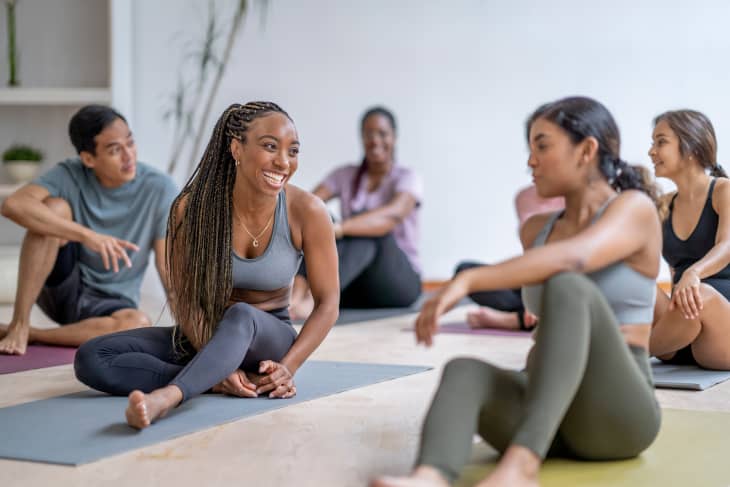
Other fun hobbies like dance classes and yoga have become more than just physical outlets for me — they’ve helped me create a tight network of people I see regularly. Whether it’s sweating it out at the gym or getting centered in yoga, I’ve formed a routine that has become a kind of weekly ritual. There’s a sense of camaraderie and support in those spaces that makes it easier to stay motivated and feel connected, both physically and emotionally.
Take It Outside
Having graduated from a virtual master’s program, I am definitely guilty of getting used to the comfort of my room. There’s nothing like waking up 10 minutes before class and still being on time.
However, throughout my semesters, I realized I had to switch up my workspace regularly to avoid feeling restless. Often, I took a class at a work-friendly cafe. Other times, I worked on assignments at my local library. And my favorite was “body doubling” — the practice of working alongside someone else to stay on task — with friends who were also on a flexible schedule.
Even after graduating, I’ve found that simply getting outside my room and out into the world has a big impact on my mental health.
Acknowledge This New Era
I quickly learned that life after college isn’t about trying to recreate the “good old days” of campus life or even about figuring out what comes next. “It’s essential to set realistic expectations,” says Estevez. “Post-grad life isn’t about replicating your college experience — it’s about embracing a new chapter.”
I’m realizing that it takes time to settle into a new chapter, and that’s a good thing. “Be patient with yourself as you figure out what works for you and focus on small, meaningful steps toward building the life you want,” Estevez says.
Though these post-grad days can be confusing and overwhelming, welcome the opportunity to find a new routine, and take things one step at a time. After all, this transition is the chance to write a new chapter in your story.