13 Transformative Room Divider Ideas for Studios and Shared Apartments (They’re Actually Magical!)
This article is part of Your *First* Apartment, a collection of stories designed to help you settle into your very first post-dorm space.
Moving into your first apartment can be a pinch-me moment, but the limited square footage that comes with it is not always equally as exciting. Whether you’ve scored a petite studio all to yourself or you’re sharing a multi-bedroom with roommates, carving out distinct zones is key. You want privacy and personality, as well as function and design. The good news? There are plenty of smart, renter-friendly room divider ideas that won’t blow your budget or raise your landlord’s eyebrows.
I tapped an interior designer and an organizing pro to share their favorite room divider solutions that don’t sacrifice natural light, precious space, or personal style at all.
13 Room Divider Ideas to Try
Before you resign yourself to a bed-in-the-living-room situation, consider this: A clever room divider can help a small space feel larger and more intentional. These expert-approved room divider ideas are perfect for first apartments.
1. Perpendicularly Place a Tall Bookcase
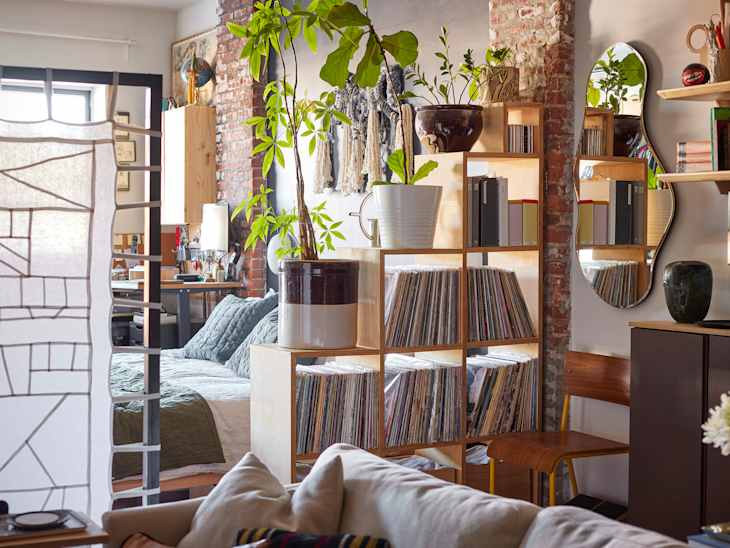
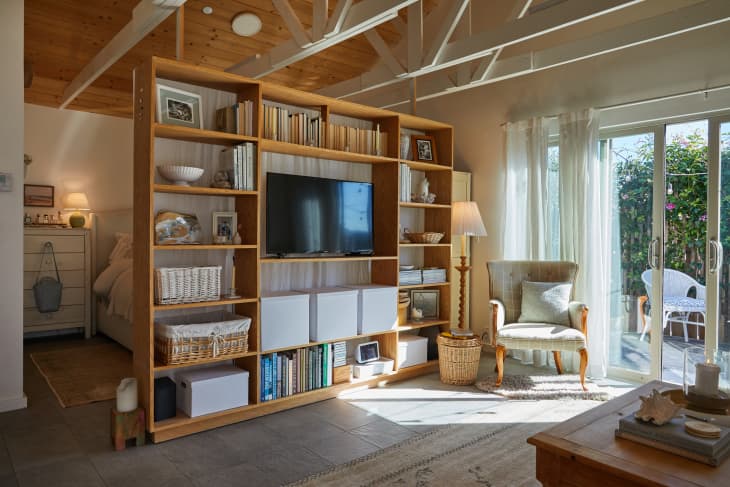
A bookcase isn’t just a place to store old textbooks. Melody Stevens, senior designer at Houston-based Design on a Dime Interiors, recommends placing a bookcase perpendicular to the wall to define a faux room. In a studio apartment, it’s a savvy way to separate your bedroom from the living area, all while showing off your favorite framed photos and travel trinkets. “It instantly gives you structure and storage,” Stevens explains.
If you have an open bookcase, she suggests attaching sheer or soft mesh fabric to the back for extra privacy. “You still get light coming through, but there’s texture, color, and a touch of privacy. It feels layered, not boxed in.”

2. Use Folding Privacy Screens
According to New Orleans-based professional organizer Olivia Parks, folding screens are one of the easiest solutions for adding a flex wall in shared bedrooms or defining a dressing area. “They also work well for separating sleeping areas from living spaces or creating a small workspace corner,” she says.
Just think: no installation, a breeze to rearrange, and perhaps best of all, you can easily move them around as needed. When they’re not in use, simply fold them up and store them out of sight. For an extra pop of personality, Stevens recommends wallpapering the screens to customize them. “It becomes art and architecture at the same time,” she says. Instant color and pattern — no paint required.

3. Put Out a Garment Rack
If your wardrobe is a work of art, use a freestanding garment rack to double as both storage and room separation. This is especially useful in studio apartments, where closet space can be limited. Arrange color-coordinated pieces thoughtfully to create a functional divider that still feels styled.
4. Install Ceiling-Mounted Curtains
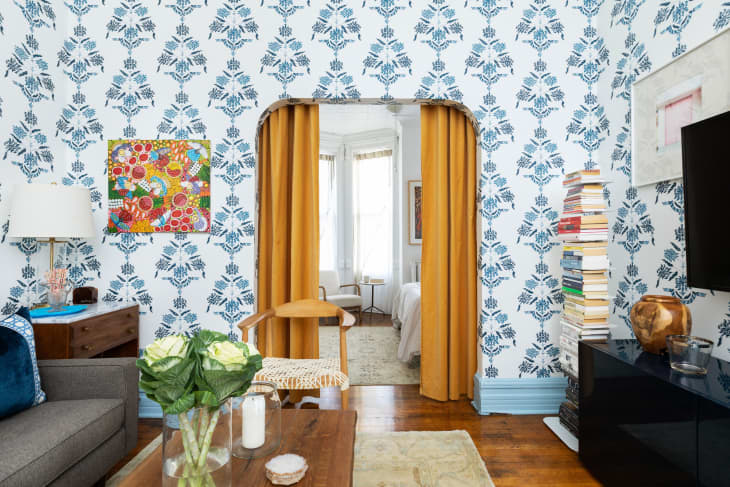
Curtains are a classic room divider for a reason, since you can open and close them as needed for privacy. They’re also affordable, versatile, and surprisingly renter-friendly. Not comfortable drilling into walls? Try heavy-duty adhesive ceiling hooks to avoid patch jobs upon move-out.
However you choose to mount them, “Go beyond basic white,” advises Stevens. “A velvet fabric panel introduces rich color and depth. It absorbs sound, adds warmth, and makes the space feel rich [and] designed, rather than divided. It is an easy way to bring drama and personality.”

5. Hang a Curtain on a Tension Rod
If ceiling mounting isn’t an option (or, let’s be honest, feels too ambitious), use a heavy-duty tension rod between two walls to hang a curtain and separate a nook or closet area. ( You can also add rods between the floor and the ceiling if you’re going for a fully blocked-off effect. Budget-friendly? Check. Temporary? Check. Perfect for renters? Definitely.

6. Suspend a Macramé Divider
For a soft, boho look, try a macramé room divider. “It doesn’t feel heavy or bulky like a regular divider,” Parks says, noting that it allows light to pass through while still creating separation. With the help of Command hooks or a slim curtain rod, macramé can double as a breezy doorway in a faux one-bedroom setup or subtly divide a living and dining area. Clip photos or hang air plants from it to personalize your space without making any hard-to-undo changes.

7. Float Your Sofa
Some of the best room divider ideas leverage furniture you already own. In a studio, Stevens recommends pulling your sofa off the wall and letting the back define the boundary between living and sleeping areas. Consider adding a slim console behind the sofa for a stronger visual boundary that also serves as extra storage and a spot to perch some nice mood lighting.
8. Strategically Place Cube Storage Organizers
Open cube organizers divide a space without blocking sight lines the way, say, a bookshelf with a solid backing might. Add a few baskets to conceal clutter and style others with colorful coffee table books and decor. The result? Utilitarian and stylish room division.
9. Define Your Space with Rugs
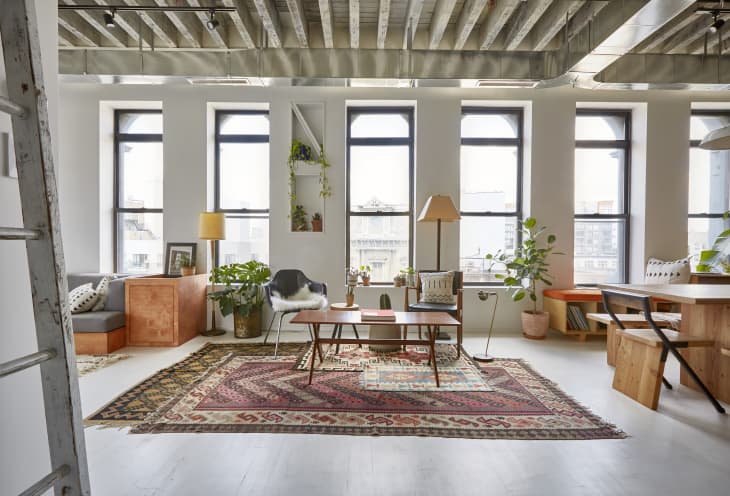
“In open-concept living, grounding is everything,” Stevens says. Using rugs to define zones is one of the simplest room divider ideas for renters. Place a bold rug under your bed to create a sleeping zone, and another under the sofa to anchor the living area.

10. Hang Plants at Varying Heights
Put your pothos to work! “Even a few plants hanging at different heights can help create that separation without making the room feel closed off,” Parks says. They add much-needed greenery and life while helping different areas feel more defined.

11. Create Zones with Lighting
Room dividers don’t always have to be physical barriers. Stevens emphasizes pairing each area with its own lighting source: a floor lamp in the living area, a table lamp by the bed, a desk lamp for studying. Separate lighting reinforces each zone and makes the layout feel purposeful.

12. Use a Desk as a Boundary Marker
WFHers, take note: Position your desk perpendicular to the wall to carve out a mini office zone in a studio or shared space. The back of the desk creates a clear boundary, and the surface defines a focused workspace so you don’t bring your inbox or assignments to bed with you.

13. Install a Pressurized Wall
Put down your hammer; this option isn’t DIY-friendly. Adding a pressurized, non-load-bearing wall can be a legit way to turn a two-bedroom into a three-person dwelling (hello, split rent!). Since it creates an actual separate room, it offers true privacy and structure in shared living situations.
However, this definitely isn’t one of the more budget-friendly room divider ideas. You’ll need to get landlord approval, confirmation that the new (temporary) wall doesn’t interfere with any fire safety or building codes, and hire a professional to safely install it. This solution is most popular in expensive, highly populated cities like NYC, where you can research companies who specialize in pressurized walls.