8 Smart Tricks to Basically Double the Size of Your Tiny Closet
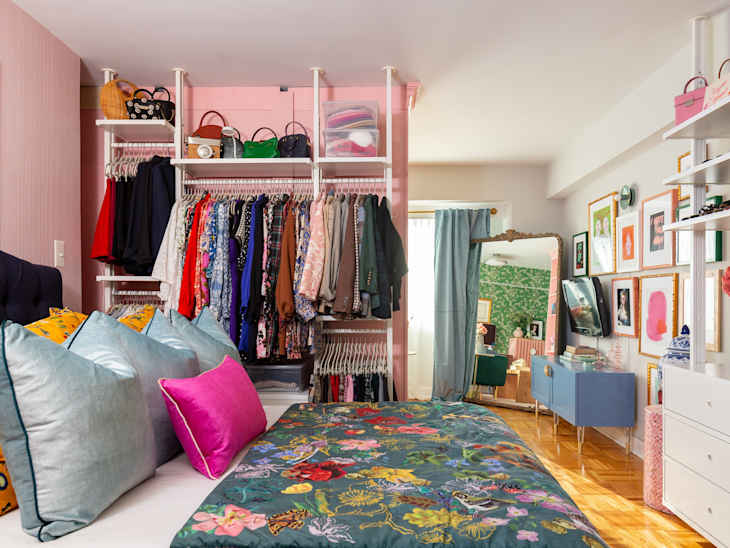
The first time I moved away from home, I literally cried at the lack of closet space in my rental apartment. At the time, I was ready to repack and sign a different lease, as structural changes weren’t an option. But luckily, with some gentle encouragement from my parents, I quickly realized there were a ton of simple organization hacks to maximize my teeny space.
“Look at your tiny closet as a puzzle you have to solve,” says Andrea Thompson, an interior designer, professional organizer, and founder of Drea Design Services. “Instead of panicking, invent and incorporate creative solutions that make your life easier and your closet more effective, efficient, and valuable.”
Sarah Bronstein, a small-space interior designer and founder of Sukkha Interior Design, agrees completely. “Every closet can be made to work, it just takes design strategy and a vision,” she says. Thanks to wall hooks, stackable drawers, and slim hangers, she’s confident there’s always a functional solution to elevate your storage.
To get you started, we rounded up the best actionable tips to transform your mini closet into a space-saving, organized wardrobe.
1. Maximize your vertical space.
Slim, velvet hangers will help you fit more clothes on a rod, but Thompson also suggests pant hangers, legging organizers, and nifty hanger hooks to max out your floor-to-ceiling storage. “Not only do these hanging options offer a seamless aesthetic, but they’re priceless in their ability to merge more clothes in a tight space,” she says.
Case in point: You can fit 10 pairs of yoga pants on a single leggings hanger. With proper use, most hangers can support up to 10 pounds, and investing in a nonslip design also prevents clothes from shifting and falling off.
2. Kick out your coats.
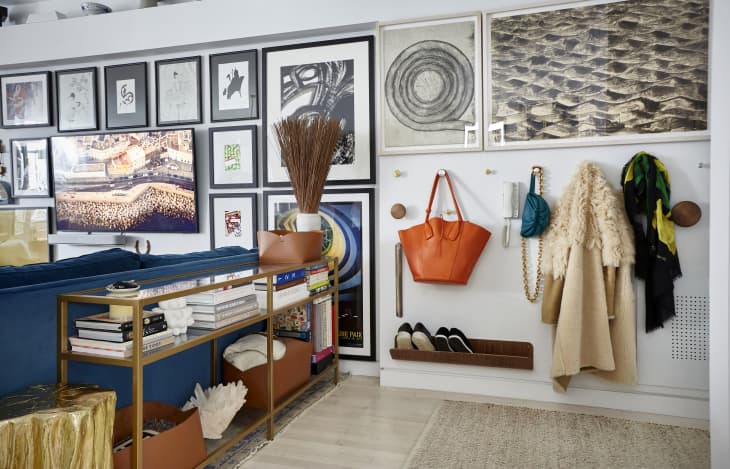
Bulky jackets eat up hanging space. Command hooks are trouble-free, and can support up to 5 pounds each, but if you’re looking for an elevated look that can hold a heavier load, Bronstein recommends modern wooden pegs (check with your landlord about whether you’re allowed to mount these). “I love these for entryway solutions if there isn’t a coat closet by the door, but they’re also great for bulkier towels and robes,” she says.
A rack of wall hooks is another easy way to reclaim wasted wall space inside a closet. The hooks are small, sturdy, and durable, so you can use them to hang practically anything within the weight limit.
3. Create miniature dresser drawers.
If you have a swinging door to your closet (as opposed to a sliding door), Thompson says an over-the-door organizer is perfect for pour-overs from your bins and drawers. Think of it as creating a second dresser to stash T-shirts, intimates, shorts, athletic apparel, and socks. “I recommend rolling your items rather than folding to fit more in the nooks, and if it’s in your budget, purchase a metal organizer instead of plastic, since plastic tends to sag with time.”
4. Store seasonal clothes in vacuum compression bags.
Sweaters are a major space suck, so Thompson recommends storing out-of-season items in vacuum compression bags. The bags are reusable and resealable, and they can hold items indefinitely, but she suggests rotating seasonal clothing to limit the volume in your actual closet. If you don’t have a suitable vacuum, you can buy compression bags with an included hand pump for convenient use. Alternatively, Thompson says you can store seasonal clothing in empty suitcases that you rarely use.
5. Organize accessories.
In a small closet, every inch counts, so if you have more accessories than you know what to do with, Bronstein recommends a purse hanger, belt hanger, hat rack, and/or scarf organizer. A pair of repurposed bookends or a letter organizer is also effective for keeping small wallets and purses from falling over while still streamlining organization.
6. Utilize labeled storage bins.
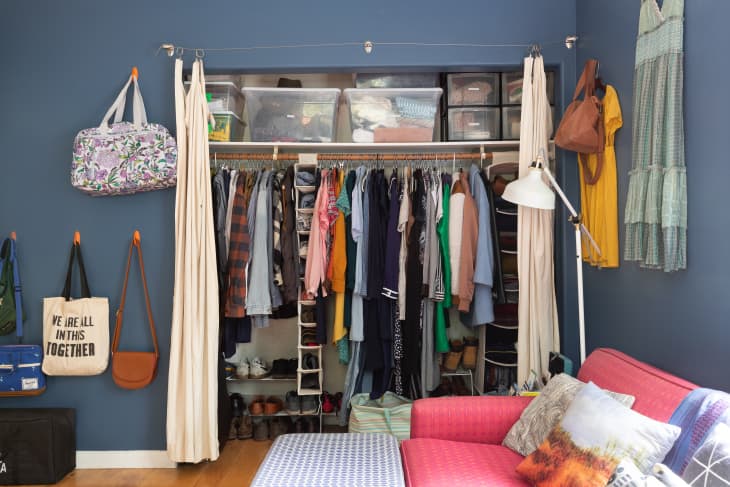
Small storage bins are a great way to store accessories (think: scarves and belts) that often take up a lot of space and make a closet look (and feel) chaotic, Thompson says. To stay extra organized, she recommends labeling each bin, so you know exactly where an item is when you need it.
Alternatively, Bronstein loves clear stackable drawers because they’re simple, adaptable, and easy to clean. As for where to situate the bins, it depends on the closet layout, but Bronstein says they’re best utilized when stacked vertically on the floor adjacent to a shoe rack. If floor space is out of commission, she also likes placing them on a top shelf to maximize the space between the shelf and ceiling.
7. Add shelf dividers.
If you have stacks of shirts and sweaters that are prone to toppling over, Thompson swears by shelf dividers. They create boundaries to keep your clothes upright, in turn, increasing space on the shelf, but they also separate your items, making it easier to see and locate what you actually have. If you prefer vertical organization, expandable shelf risers are another functional option.
8. Invest in a shoe rack.
Floor space is finite, so Thompson recommends turning the bottom of your closet into a multistory shoe haven. A tiered shoe rack houses at least nine pairs of kicks (more if you stack them) to maximize vertical storage and prevent a messy pile from accumulating on the floor.
“I find that placing heels and boots back to front for each pair works best to consolidate space (i.e., each shoe in the pair facing the opposite direction), and I typically lay flats and sandals sole to sole or with one inserted into the other so they lay out as one piece,” Thompson says.
This post originally appeared on Apartment Therapy as part of the Start Here Guide for Renters, presented by GEICO. See it there: 8 Smart Tricks to Double the Size of Your Tiny Closet (They’re All Renter-Friendly!)