Everything You Need to Know About Getting Your First Credit Card (But Are Too Stressed to Google)
After graduating from college, it’s natural to have a lot on your mind. And when you’re thinking about your next financial move, that can mean a lot of things. Do you need to get your first credit card? Should you? Honestly: How do you even apply for a credit card for the first time?
If you haven’t used a credit card during college, post-graduation can be a logical time to start, but that’s not always the next best move for everyone. In fact, according to financial therapist Aja Evans, LMHC, there are key questions you should ask yourself before getting your first credit card, including whether you find it hard to limit your spending or have a budget that you stick to.
Still, if you’re looking for your first off-campus apartment or maybe leasing a car after college, you’ll likely need to get your credit score checked. You’ve heard a lot about credit scores, and you know you need to be paying attention to yours. But what even is credit, and how is it scored, and how do you start building it?
If you’re ready to learn more about credit, how to decide when to apply for your first credit card, and what the alternatives are if you’re not, you’ve come to the right place. Here’s what the experts have to say about how to make your first big financial move after college.
What is credit and how important is it to start building?
Your credit refers to your credit score, which is a number that’s used to determine how likely you are to make payments on time on a loan. This one number, which ranges from 300 to 850, can dictate whether or not you’ll be approved for everything from a credit card to a mortgage.
You need credit to rent an apartment, set up utilities, or buy a car on a payment plan. Without credit, you’re fighting an uphill battle to establish yourself as a financial adult, and often, the easiest way to build credit is to get your first credit card and use it.
“Building and maintaining good credit means establishing a strong credit history, which involves paying off your balances each month, never missing a payment and always paying on time, andkeeping your credit card utilization low,” saysCourtney Alev, consumer financial advocate at Credit Karma. (Your credit card utilization is how much you spend — your balance — divided by how much you’re allowed to spend — your credit limit — to get a sense of your spending habits.)
%2Fmoney-custom-stock-4)
Should I get a credit card?
If you’re looking to build credit, opening your first credit card is one of the most efficient ways to get started. But taking out a credit card means holding yourself accountable to using it correctly, paying it off on time, and not doing damage to your credit score as you’re just getting started financially.
“Using credit responsibly and maintaining good credit scores can allow you to buy things you need that you can’t purchase all at once with cash, like a car or a home, and can help you build wealth over time,” says Alev. “And, if you’re faced with an unexpected expense, credit can help you stay afloat financially.”
Alev suggests that if you can’t commit to paying off your credit card balance each month, then you might not be the right candidate for a credit card at this moment. “You should avoid charging more on your credit card than you can pay off at the end of the month, to avoid paying interest fees,” says Alev.
Evans adds that you should carefully read the fine print on any potential credit card. It’s often not as simple as charging purchases to your card and paying it off. “Understand what your interest rate is, understand what the statement date is, and when your due date is,” says Evans. “I can’t stress enough the importance of understanding compound interest as well. Armed with that personal financial intel, understand that this is not free money and you will have to pay back every penny you use.”
What if I’m not ready for a credit card?
Knowing that you’re not ready for a credit card is a mature choice. You know yourself, and you know your limits. But that doesn’t mean you can’t start building credit. Consumer finance and budgeting expert Andrea Woroch has several ideas for those who are eager to build their credit history, but would rather not have the untethered freedom of a traditional credit card.
She suggests asecured credit card for those who have the cash available to pay the security deposit necessary, which acts as your credit limit, or the total amount you can charge to the card. The deposit is refundable once you close the credit card, and Woroch notes that some secured credit cards even offer cash back earning opportunities.
“Alternatively, you can build credit by asking to be a secondary user on another person’s credit card account,” says Woroch. Ideally, you’d find someone you trust who has strong money management habits. Negative credit card use will hurt both of you, so don’t enter into this arrangement unless you have 100% confidence in their ability to pay the credit card.

What’s a good first credit card to get?
There’s no one-size-fits-all credit card. The first credit card you choose will depend on your spending and financial goals. But Amy Pridemore, executive director of theVirginia Credit Union Financial Success Center at Virginia Commonwealth University, advises first looking at the financial institution you already use for checking or savings accounts. “You have already established a reputation and relationship at that financial institution, which may allow for an easier application process,” says Pridemore.
However, she notes that if you choose to go with one of the major cards, like Discover or Chase, look for a card that doesn’t have annual fees. “Annual fees are typically set up for you to receive benefits, and when you are first building credit, those are not important,” adds Pridemore.
If you’re looking at more specific credit card benefits, Lora Monfared, head of consumer card products at Bank of America, says, “Choose a credit card with a rewards program that fits your lifestyle and budget to make your spending go further. For example, if you don’t travel often, a travel rewards card may not be the best option. Instead, look at a card for earning rewards on everyday expenses like gas, dining, and grocery shopping.”
How do I apply for a credit card for the first time?
Once you’ve decided which credit card to get, applying for the card itself is pretty simple, whether you do it online or go into your bank to apply in person. Just make sure to have some crucial information on hand, like your social security number, your bank account number, and your employment information. You have to be at least 18 (in the U.S.) to have a credit card of your own, and if you’re under 21 you’ll need to show that you have a source of income (whether that’s a full-time job or a part-time paycheck).
What should you use a credit card for?
To keep yourself focused on building credit rather than treating yourself to a shopping spree with your new plastic, Evans suggests starting with a small recurring purchase on the card. “Whether it is your Netflix subscription, gym membership, or some other monthly bill, that is a good place to start. I would not recommend diving in to put all your purchases on the card. Let’s warm up to that,” she says.
She recommends coming up with a number that you can feel comfortable paying off every month without issue, and making sure the recurring purchases come in below that number. “This can be really difficult for people because the credit limit may give you access to money you didn’t have before and allow you to make purchases you really want, but it is important to set healthy financial boundaries for yourself. Sometimes you have to tell yourself no,” Evans says.
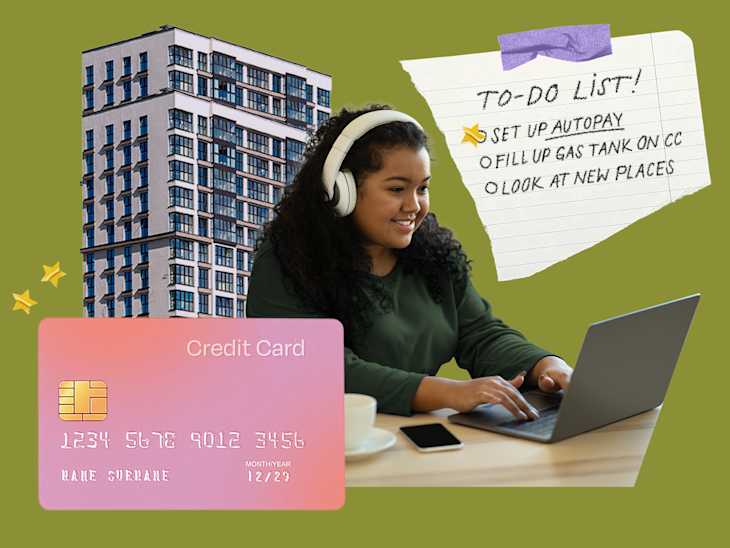
Pridemore adds, “When first starting out, you should use a credit card for a small purchase, such as filling up your gas tank, and then paying off the card when the statement comes.” However you decide to use your first credit card, set it up on auto-pay if possible. That way, you’ll never miss a payment, and you’ll be on your way to excellent credit.
Find out how to handle your finances as if you’re a Personal Finance major with Dorm Therapy’s Don’t-Stress Guide to Saving & Spending in College.